
 By Kendry Lee
Exterior cleaning often looks straightforward from a distance. A house looks dirty, equipment arrives, and the buildup gets washed away. In practice, the condition of the siding, trim, windows, landscaping, coatings, and nearby outdoor spaces should all be reviewed before cleaning begins.
Thoughtful house pressure washing starts with the surface rather than the equipment. Peeling paint, loose panels, old repairs, delicate finishes, stubborn stains, and objects sitting close to the walls may all affect the work. Spending a little time reviewing these details creates a clearer cleaning plan and more realistic expectations for the finished exterior.
Walk Around the Entire House First
Start with a simple exterior walkthrough.
Look at every side of the house instead of focusing only on the front. Shaded walls may collect heavier organic buildup, while areas exposed to sprinklers may show mineral or rust-colored staining. Sections beneath trees may look different from walls receiving direct sunlight.
Take note of the areas that bother you most.
One side may need more attention near the foundation, while another has visible buildup beneath the roofline. Pointing out these locations before work starts gives the cleaning contractor useful context about what you have noticed.
A walkthrough also creates an opportunity to spot existing damage before water reaches the surface.
Check the Condition of Paint and Coatings
Dirty paint and failing paint are two different problems.
A wall may look dull because of dirt and exterior buildup. Another wall may have fading, chalking, flaking, or peeling paint that cleaning will not restore.
Look closely around trim, window frames, corners, and areas that receive strong sun.
Older coatings deserve particular attention because high-pressure cleaning is not appropriate for every painted surface. The cleaning approach should reflect the condition of the finish beneath the dirt.
If repainting is already planned, mention that before scheduling. Cleaning may form part of the preparation process, but the condition of the coating still matters.
Look for Loose Siding and Trim
Exterior siding should be reviewed for loose panels, cracked pieces, gaps, and damaged trim.
These conditions may already exist before cleaning begins.
Pay attention around corners, utility penetrations, windows, and doors. If one piece looks loose or damaged, point it out rather than assuming the cleaning process will correct it.
Cleaning removes exterior buildup. It does not repair siding or reconnect damaged trim.
For more information about local exterior cleaning and available services, visit their website here.
Identify Stains Before Treating Them Like Dirt
Not every mark on a house exterior is ordinary grime.
Rust-colored irrigation stains, mildew-like discoloration, old paint marks, grease, and mineral deposits may behave differently during cleaning.
Some stains sit on the surface. Others penetrate coatings or materials more deeply.
Point out persistent marks before the work begins.
This makes it easier to separate general house pressure washing from stain-specific concerns. It also prevents the entire project from being judged by one old mark that ordinary exterior cleaning may leave partially visible.
Check Around Windows and Doors
Windows and doors create transitions in the exterior surface.
Look around frames, seals, trim, and nearby siding. Note any cracked caulk, loose trim, visible gaps, or known leak concerns.
Tell the contractor about those areas before cleaning starts.
Older windows or doors may also have worn finishes that deserve a gentler approach than nearby siding.
Exterior cleaning should account for these transitions rather than treating the entire wall as one uninterrupted surface.
Move Items Sitting Against the House
Outdoor furniture, grills, toys, garden decorations, storage containers, and planters often sit close to exterior walls.
Moving lightweight items creates better access and reduces the chance of leaving uncleaned sections behind them.
Check patios, lanais, side yards, and entrances.
Anything touching the house deserves attention before cleaning day.
Heavy or fixed items should be discussed in advance instead of assuming they will be moved during the appointment.
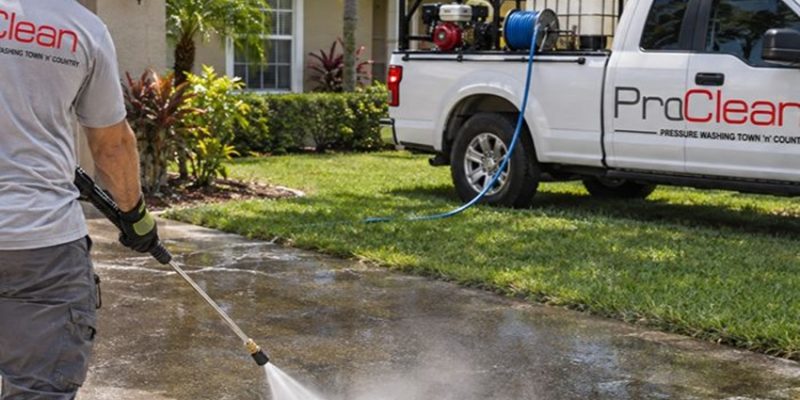
The current ProClean Pressure Washing Town ‘n’ Country site also advises discussing preparation for furniture, rugs, electronics, cushions, decorations, and other items located around outdoor living spaces.
Give Landscaping Some Attention
Shrubs, flowers, vines, mulch beds, and other landscaping often sit directly beside exterior walls.
These areas affect access and water movement.
Look for branches touching the siding or plants covering sections that need cleaning. Trim back overgrowth when appropriate and mention any delicate landscaping during the project discussion.
Irrigation systems deserve attention too.
Sprinklers that repeatedly hit the house may contribute to staining. Cleaning the wall removes existing buildup, but the same marks may return if the source continues afterward.
Think About Where Wash Water Will Travel
Exterior cleaning moves dirt, sediment, and other material away from surfaces.
That makes surrounding pavement, soil, landscaping, and drainage areas part of the project.
The U.S. Environmental Protection Agency explains that stormwater flowing across hard surfaces may pick up dirt, chemicals, oil, and other pollutants before reaching drains, streams, lakes, or groundwater. Its guidance on urbanization and stormwater runoff emphasizes reducing pollution at the source.
Look around the property for nearby storm drains and areas where water naturally collects.
Driveways, sidewalks, patios, and other paved surfaces may direct runoff farther than expected.
Check Exterior Electrical Components
Outdoor outlets, light fixtures, cameras, speakers, and other electrical components may be mounted directly to the house.
Walk around the property and identify them before cleaning.
Exterior outlets should have proper covers, and damaged components deserve attention before water is introduced nearby.
Mention anything unusual, especially temporary wiring, loose fixtures, or recently installed equipment.
The same applies to decorative lighting or extension cords running through outdoor areas.
Clear access around these items makes the cleaning area easier to understand.
Look Up Before Cleaning Begins
Exterior walls are only part of the space around a house.
Gutters, soffits, roof edges, vents, second-story trim, and other elevated components may sit directly above the area being cleaned.
Look for loose pieces, damaged gutters, or other visible concerns.
If roof cleaning or gutter work is also planned, discuss those services separately so the complete project follows a logical order.
Cleaning one area and then performing messy work directly above it later may create unnecessary repeat cleaning.
Screened Areas Need Their Own Preparation
Homes with lanais or screened outdoor spaces have additional surfaces to review.
Screen frames, mesh, doors, tracks, flooring, and nearby walls may each need different treatment.
Remove cushions, electronics, lightweight furniture, and decorations when requested.
Point out torn screens or loose framing before work begins.
A screen enclosure is not one uniform material. Cleaning should account for the differences between the floor, metal framing, mesh, and adjoining house surfaces.
Pay Attention to Pool Areas
If exterior walls border a pool deck or lanai, the surrounding setup matters.
Furniture, pool equipment, toys, hoses, and decorative items may reduce access. Deck coatings may also deserve separate consideration from the house exterior.
Clarify which surfaces belong in the project.
House pressure washing may focus on siding and trim, while pool deck cleaning involves a different surface with its own condition and buildup.
Defining those boundaries before cleaning begins keeps the project organized.
Older Repairs Should Be Pointed Out
Previous repairs often remain visible if you know where to look.
Patched siding, repaired cracks, replaced trim, sealed joints, or areas around older water damage may respond differently from surrounding materials.
Mention these repairs before washing.
The contractor does not need the entire history of the property, but useful details about repaired exterior areas provide additional context.
A section that looks slightly different may reflect previous work rather than dirt or poor cleaning.
Consider the Age of the Exterior
Newer siding and recently painted surfaces present different conditions from materials that have spent decades outdoors.
Age alone does not determine the cleaning method, but it adds useful context.
Older finishes may show fading, oxidation, loosened caulk, or previous patching. Recently painted surfaces may need appropriate curing time before washing.
If you know when the siding, paint, windows, or trim were installed, share that information during the project discussion.
Those details support a surface-specific approach instead of assuming every exterior reacts the same way.
Separate House Washing From Repair Work
Exterior cleaning often makes existing wear easier to notice.
Once dirt is removed, peeling paint, faded sections, cracks, damaged trim, or old repairs may stand out more clearly.
That does not mean cleaning caused those conditions.
Before house pressure washing, identify visible damage and understand that cleaning and repair serve different purposes.
A cracked panel still requires repair. Failing paint still needs coating work. A leaking window still needs attention from the appropriate contractor.
Cleaning deals with buildup on the exterior surface.
Do a Final Preparation Walk Before the Appointment
A quick walk around the house shortly before cleaning day may catch items missed earlier.
Check that movable objects have been relocated as discussed. Close windows and doors. Secure pets indoors or away from the work area. Confirm access to gates and exterior spaces included in the scope.
Look for newly placed delivery boxes, children’s toys, hoses, or garden equipment.
Small obstacles may appear between scheduling and cleaning day.
A final walkthrough keeps the exterior accessible and makes it easier for the cleaning work to follow the agreed plan.
Start With the Surface Before Starting the Washer
The best exterior cleaning plan begins with understanding what is already there.
Paint condition, siding damage, stains, landscaping, windows, outdoor furniture, electrical components, screen enclosures, and previous repairs all influence how a house exterior should be approached.
Professional house pressure washing should reflect those differences rather than treating every wall and finish the same way.
If siding, trim, entry areas, or other exterior surfaces around your property need cleaning, contact ProClean Pressure Washing Town ‘n’ Country to discuss the condition of the surfaces and request a free estimate for the areas you want cleaned.